From Customer Feedback
to What to Do Next
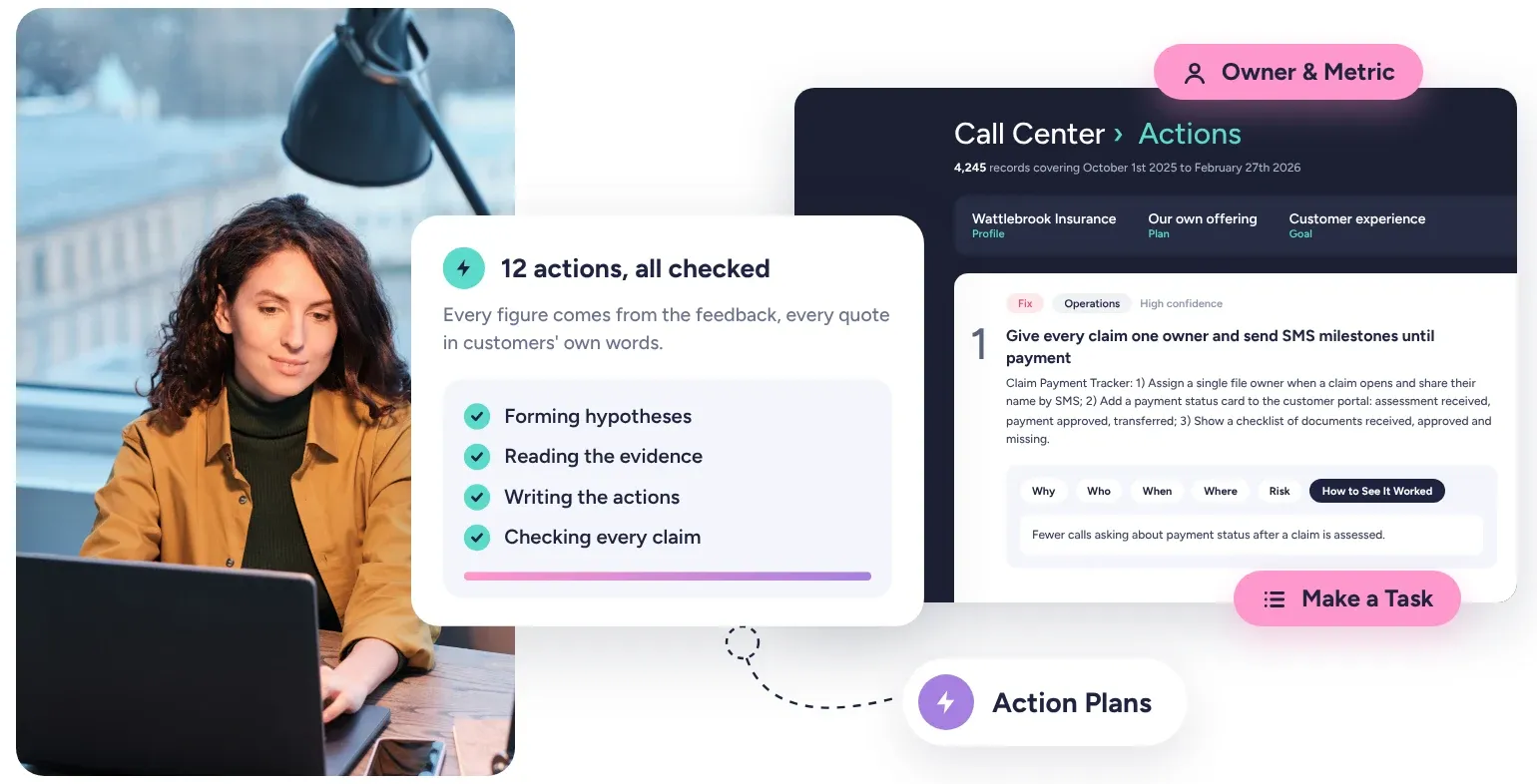
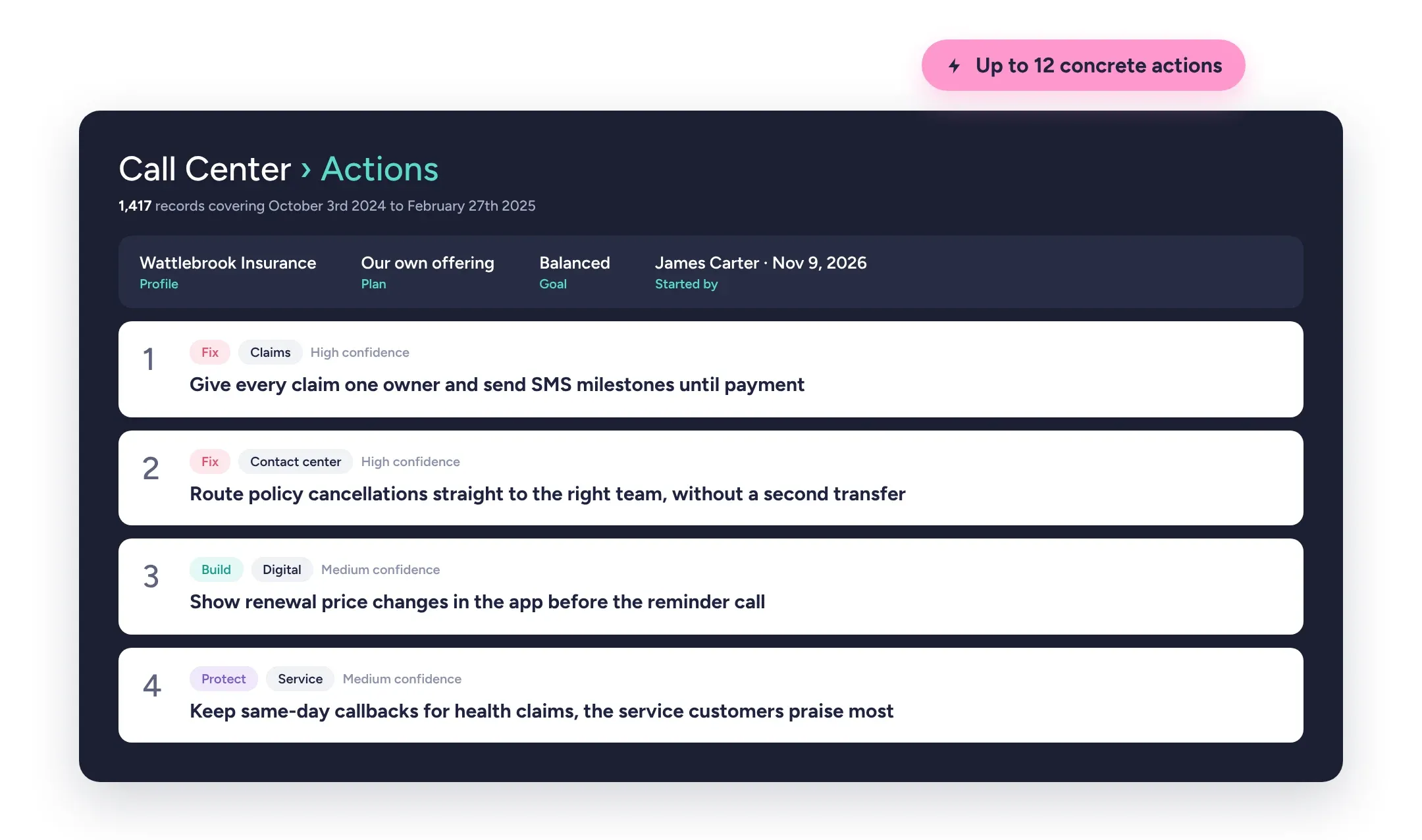
Kimola turns customer feedback into up to 12 concrete actions, each with an owner, a metric and the evidence behind it, checked before you see it.




















3,000+ teams in more than 90 countries use Kimola.
Where Research Usually Stops
A report tells you what customers say: the themes, the sentiment, the Dimensions, the Signals. Deciding what to do about it is a separate step, and it is often where research stops, somewhere between a slide deck and a meeting that ends without an owner.
Kimola takes that step with you. An Action Plan turns the findings of a Report or a Space into up to 12 concrete actions, written for your organization and backed by your customers' own words.
Written From Where You Stand
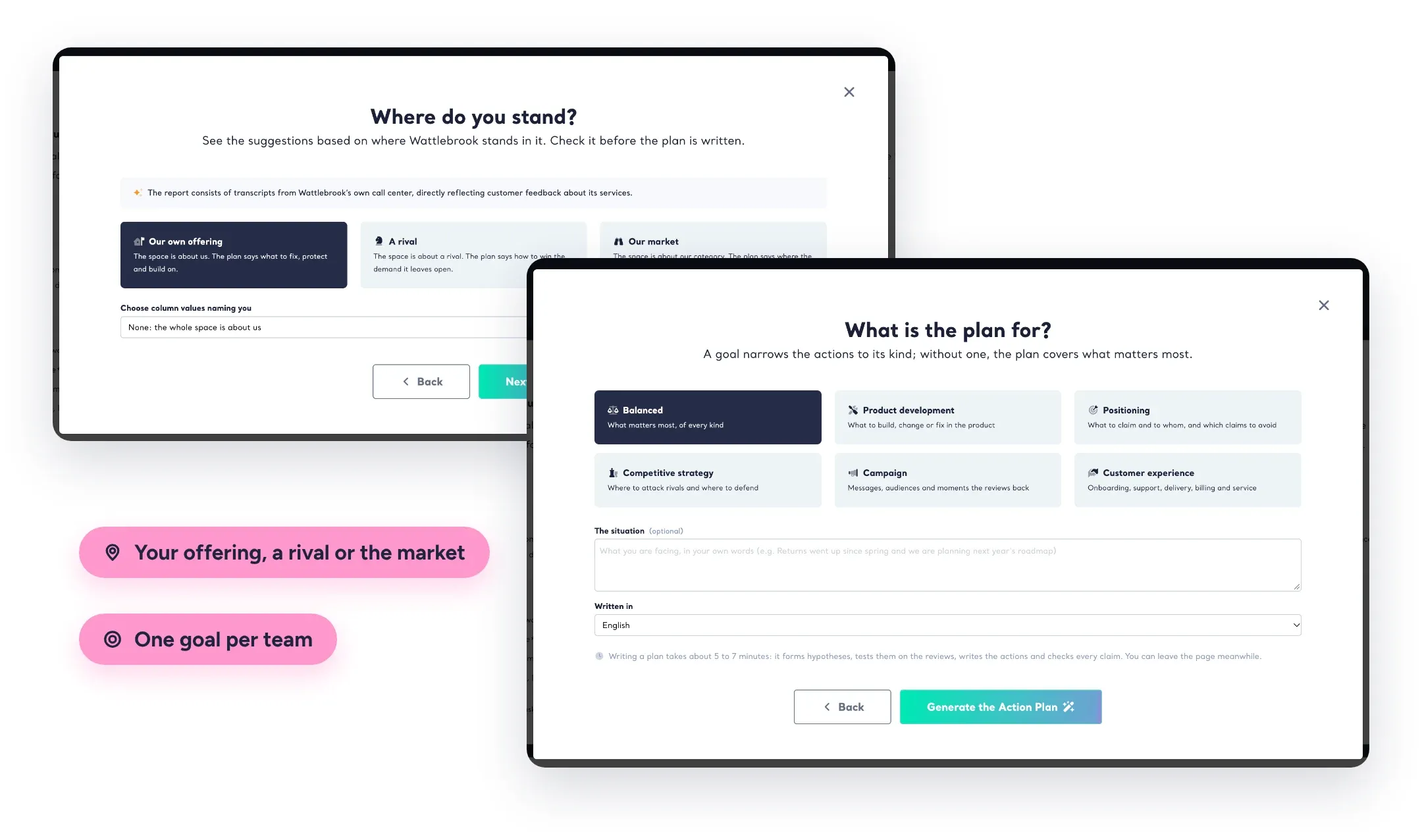
The same complaint means different things depending on whose product it is about. About yours, it is something to fix; about a rival's, it is demand you can win. Every plan starts from where you stand, your own offering, a rival or the market, and from a short profile of who you are, so the actions fit your business, not just your category.
Choose a goal, from product development to campaign or customer experience, and the same feedback gives each team a plan of its own.
Related: Create an Action Plan
Ready for Someone to Own
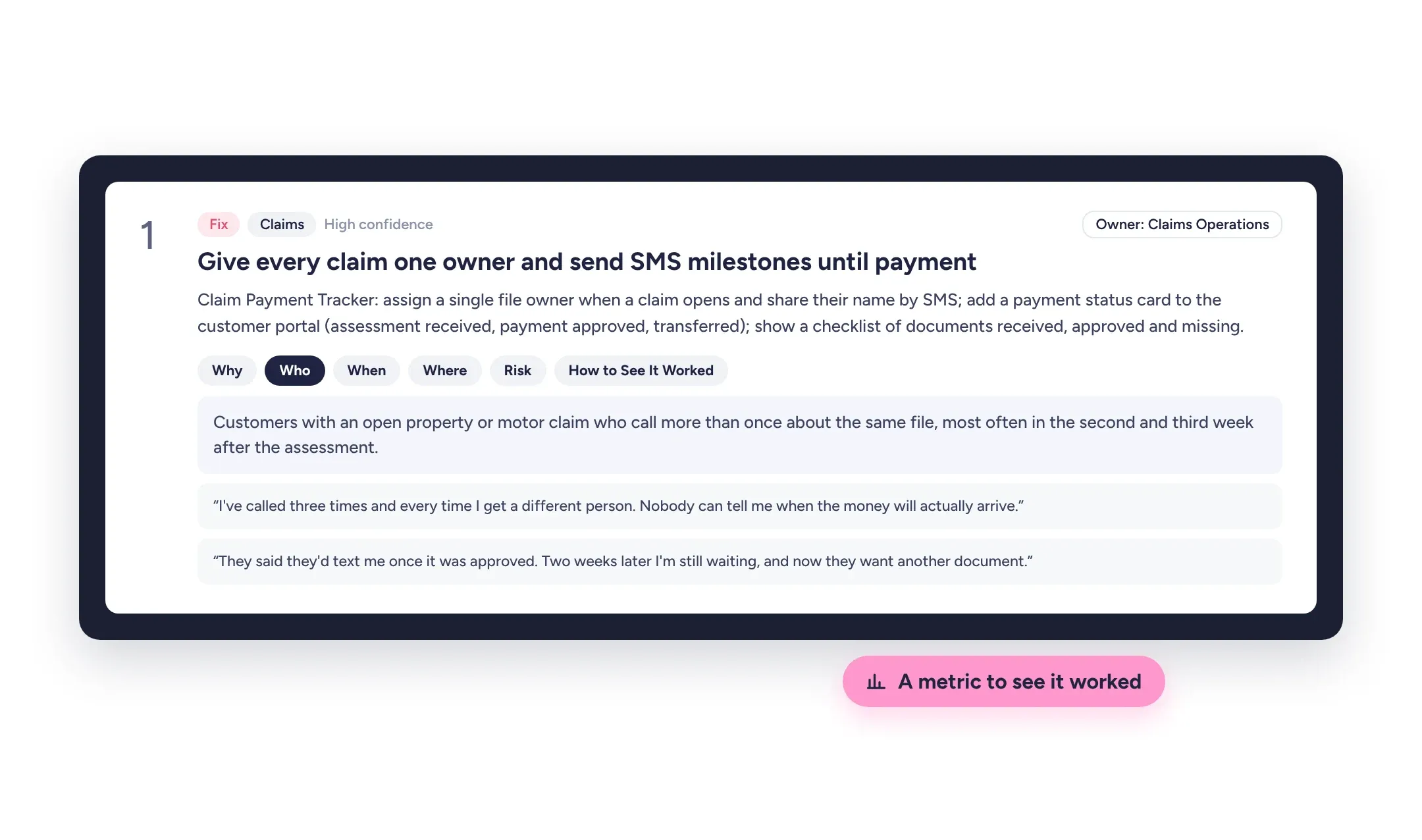
Every action is concrete enough to start on: what to change, for whom, at which moment and where. It names the team that would own it, the risk to watch and the metric that will show whether it worked, with a confidence level and quotes from customers.
For an online fashion retailer, that might be a size comparison on the product pages of the two lines customers return most, owned by the e-commerce team and measured by how often customers mention sizing.
Checked Before You See It
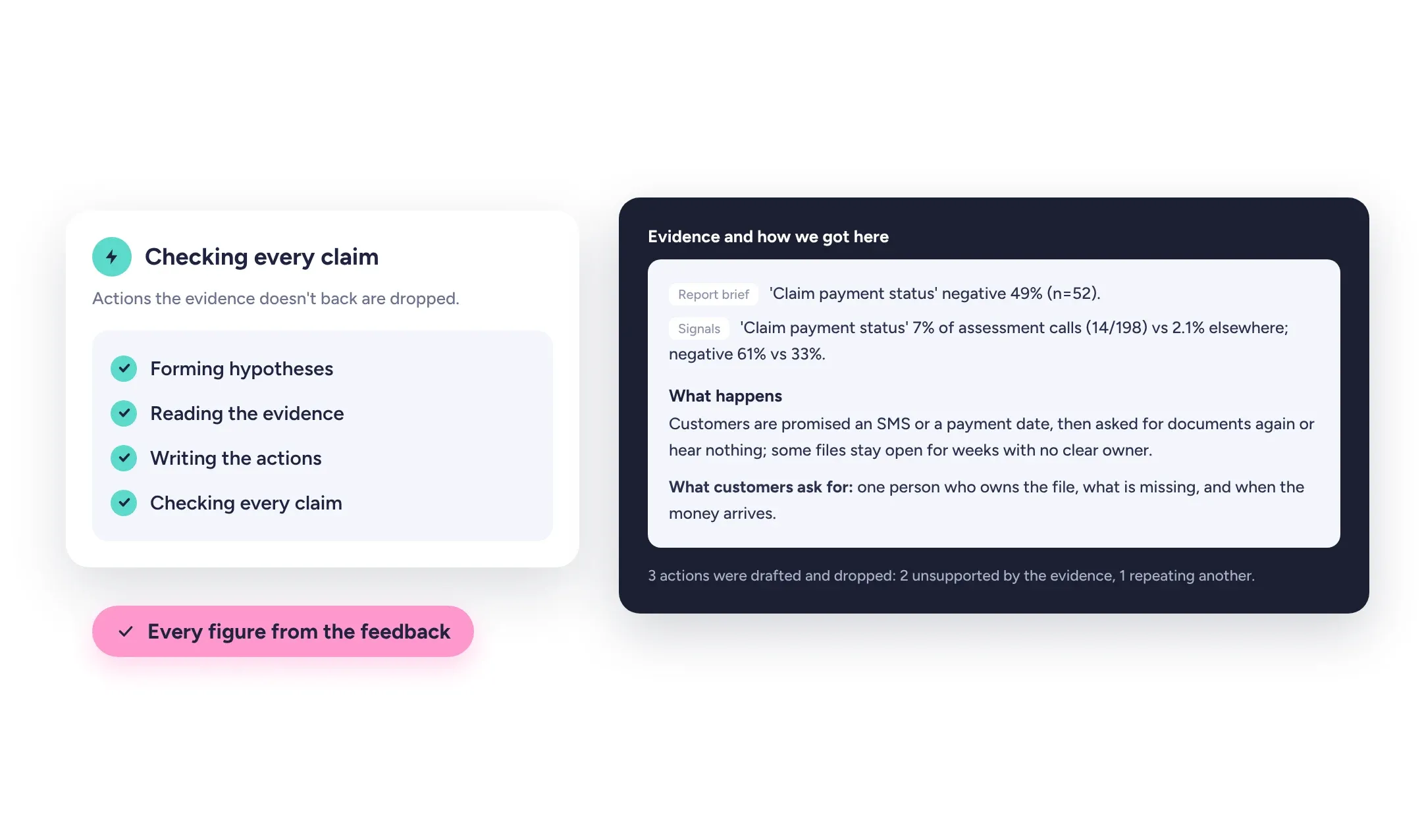
Kimola doesn't brainstorm. It forms hypotheses, reads the feedback behind each one, writes actions from what it finds and then checks every figure and quote against the evidence. Actions the evidence doesn't back firmly enough are dropped, and so are actions that repeat each other. Plans build on Signals, so an action rests on a tested finding rather than a single comment, and every action opens the reasoning behind it.
If nothing passes the checks, Kimola writes no plan at all rather than one you would have to verify yourself.
From a Plan to Work
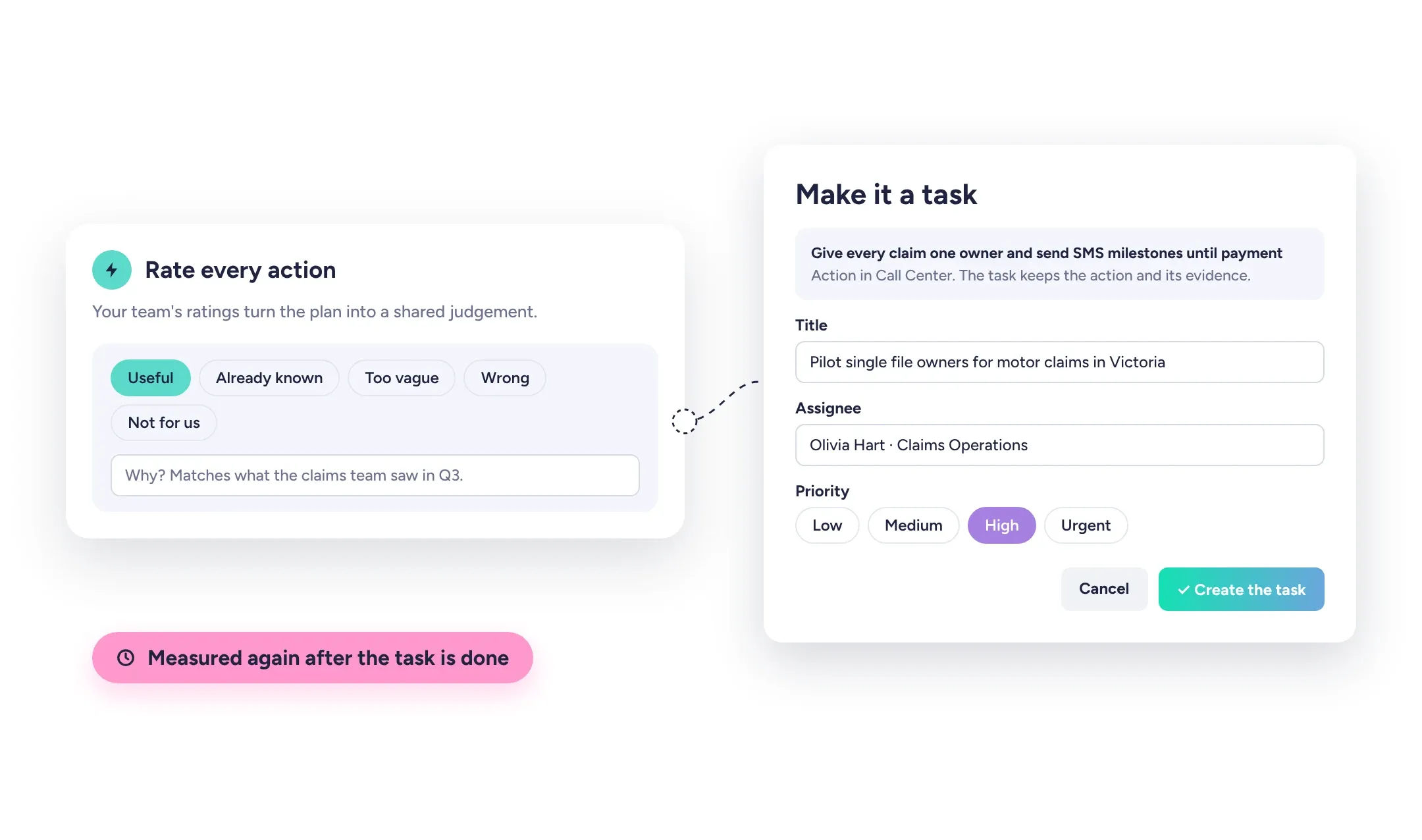
Your team rates every action, so the plan becomes a shared judgement rather than one person's reading. In a Space, an action becomes a Task in one click, and when it rests on a Signal, Kimola reads the same feedback again after the task is done to tell whether customers noticed.
Action Plans in Reports are available in every package. In Spaces, they are part of the Enterprise package and Kimola On-Premises.
Related: What is an Action Plan?
Bring the feedback you already have.
Organize feedback like a research team.
See the people behind the feedback.
See how teams turn different kinds of feedback into research.






Frequently Asked Questions
About Action Plans
-
How is this different from asking an AI chatbot for recommendations?
A chatbot writes plausible advice from whatever you paste in. Kimola forms hypotheses, tests them on your feedback and drops every action the evidence doesn't back. Every figure comes from the feedback and every quote is in a customer's own words, and the plan is written for your organization and your side of the market.
-
Can I write an Action Plan about a competitor?
Yes. In a Report, you can write a plan from the side of a rival, and Kimola tells you how to win the demand it leaves open. You can also write one for your market as a whole, to see where the opportunities are.
-
What do I need before creating an Action Plan?
A Report whose analysis is complete, or a Space with at least one classified file, and a profile of the organization the plan is for: its name and a few words on what it offers and to whom. That short description is what makes the actions specific to you.
-
What happens when the evidence isn't strong enough?
Kimola drops the actions the evidence doesn't back and tells you how many it dropped. If no action passes the checks, no plan is written. A narrower goal or a description of your situation usually helps.
-
How do Action Plans relate to Signals?
Signals show where one group or one period of feedback stands apart. An Action Plan reads the feedback together with those Signals, so its actions can build on tested findings and explain what to do about them.
-
How do Action Plans relate to Tasks?
In a Space, any action can become a Task for a teammate, with the action and its evidence attached. When the action rests on a Signal, Kimola measures the same feedback again after the task is done, so you can see whether the change made a difference.
Turn customer feedback into structured market research in 30+ languages—no AI training needed.
Create a Free Account No credit card · No commitment