Ten Questions
for Every Piece of Feedback
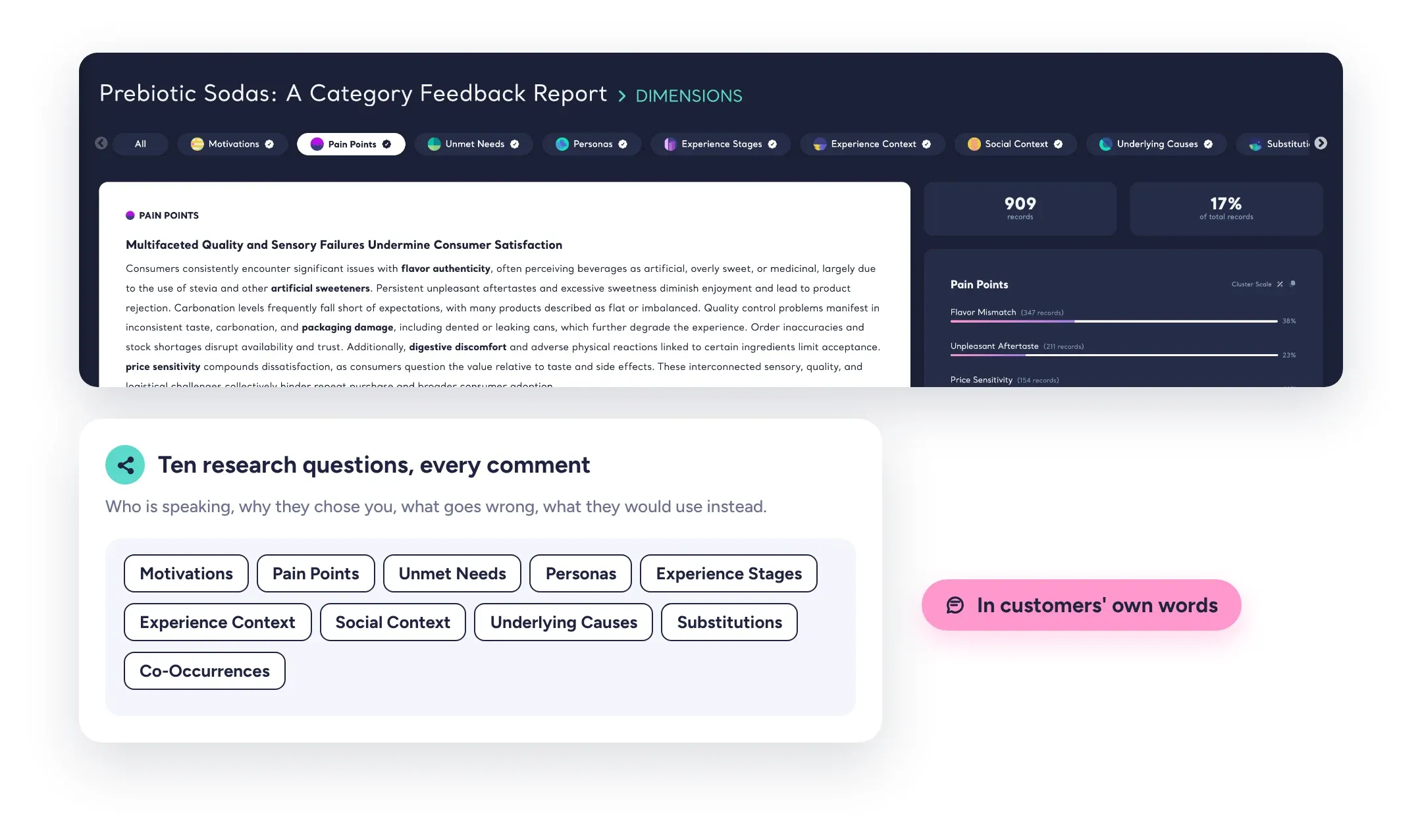
Kimola asks every piece of customer feedback ten research questions, from who is speaking to what they would use instead, and groups the answers.
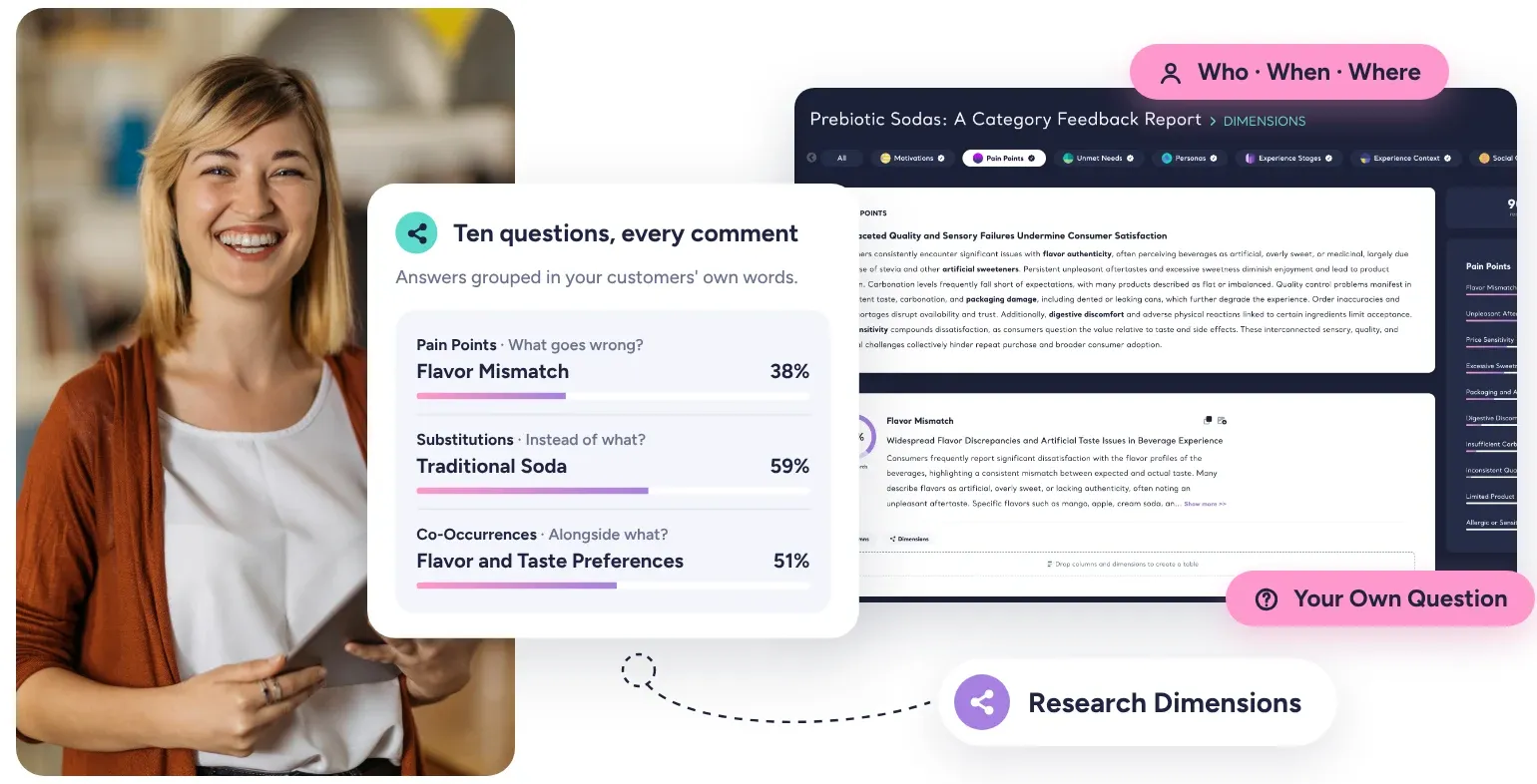




















3,000+ teams in more than 90 countries use Kimola.
Beyond Topics and Sentiment
Themes and sentiment tell you what customers talk about and how they feel. They don't tell you why customers chose you, what they still miss, who they are or when a problem happens. A research team answers those questions by reading feedback with a fixed set of questions in mind.
Kimola asks ten such questions of every review, survey response and support conversation. It groups the answers across all of your data in your customers' own words rather than predefined categories, and keeps every answer tied to the feedback behind it.
Related: What is a Dimension?
Who, When, Where and With Whom
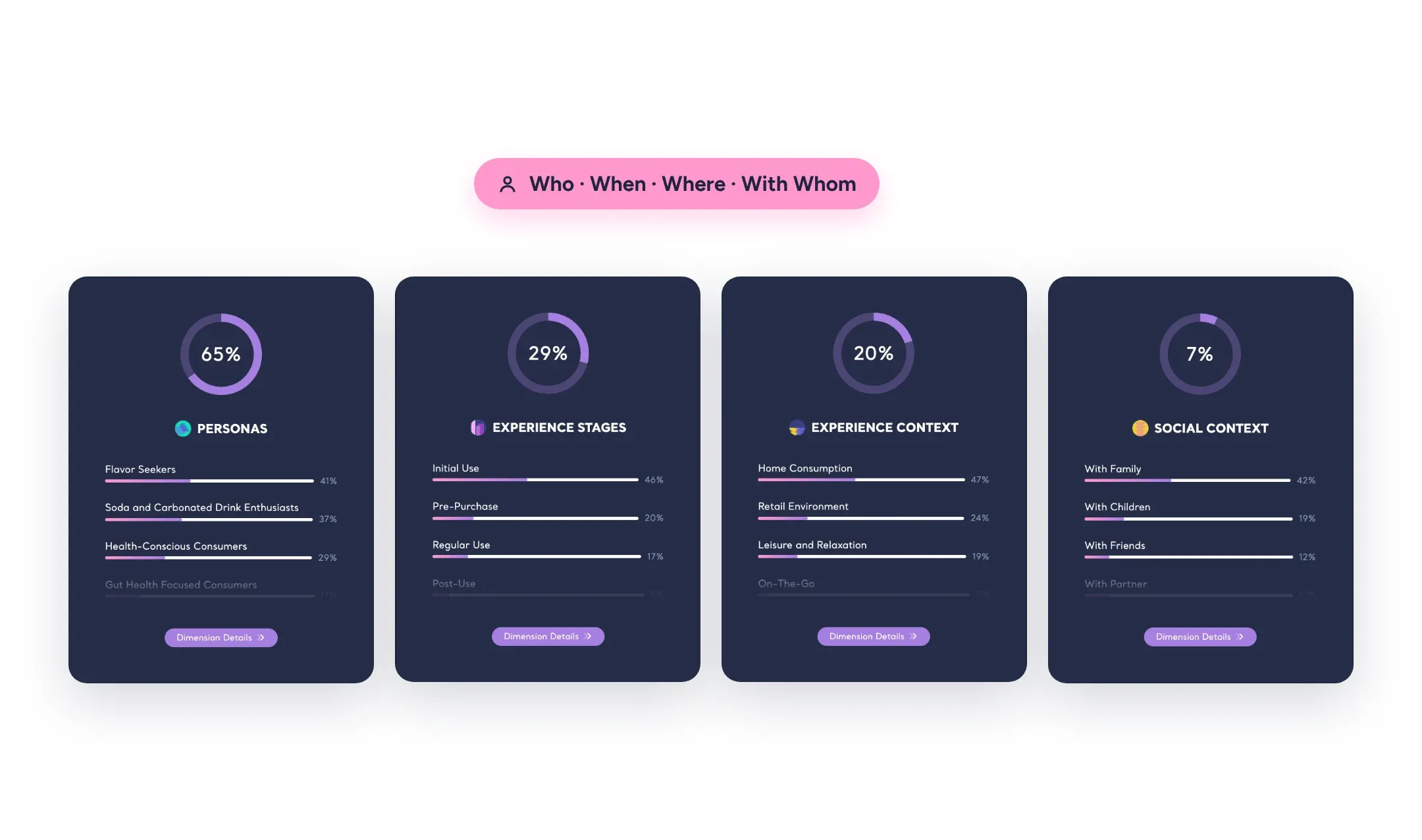
Four Dimensions place every experience in its situation. Personas asks who is going through it, Experience Stages when it happens, Experience Context where, and Social Context with whom: alone, with a partner, with children or with a whole team.
Together they turn an anonymous complaint into a scene you can design for. A parent setting up a product at home on the first evening has a different problem from an office manager three months in, even when both call it the same thing.
Related: Personas · Experience Stages · Experience Context · Social Context
What Works, What Breaks and Why
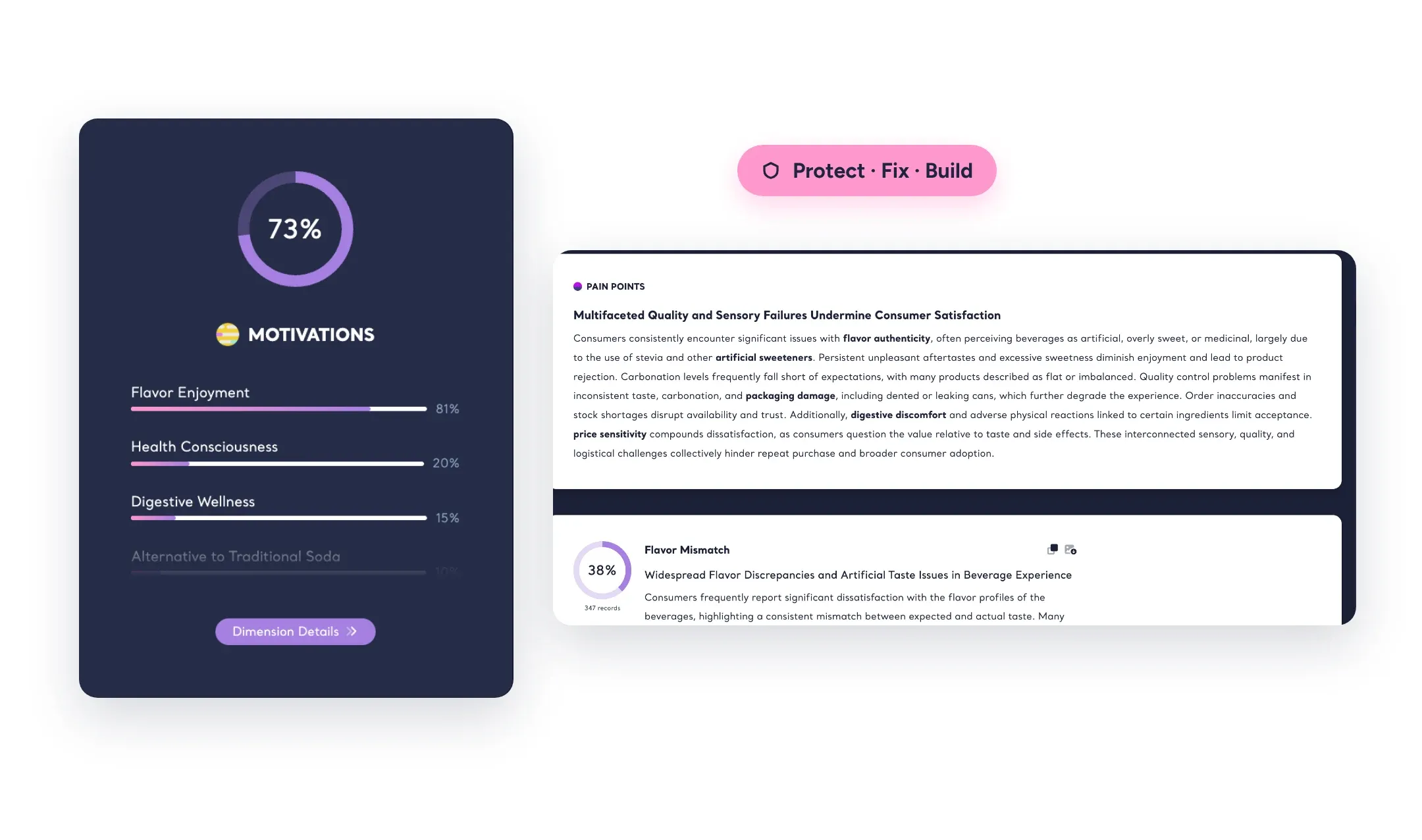
Motivations asks why customers choose you, Pain Points what goes wrong, Unmet Needs what is missing, and Underlying Causes why it happens, such as a pricing change behind a wave of cancellations or a new courier partner behind late deliveries.
Read together, they separate what to protect, what to fix and what to build, and they explain a problem instead of only counting it.
Related: Motivations · Pain Points · Unmet Needs · Underlying Causes
What You're Weighed Against
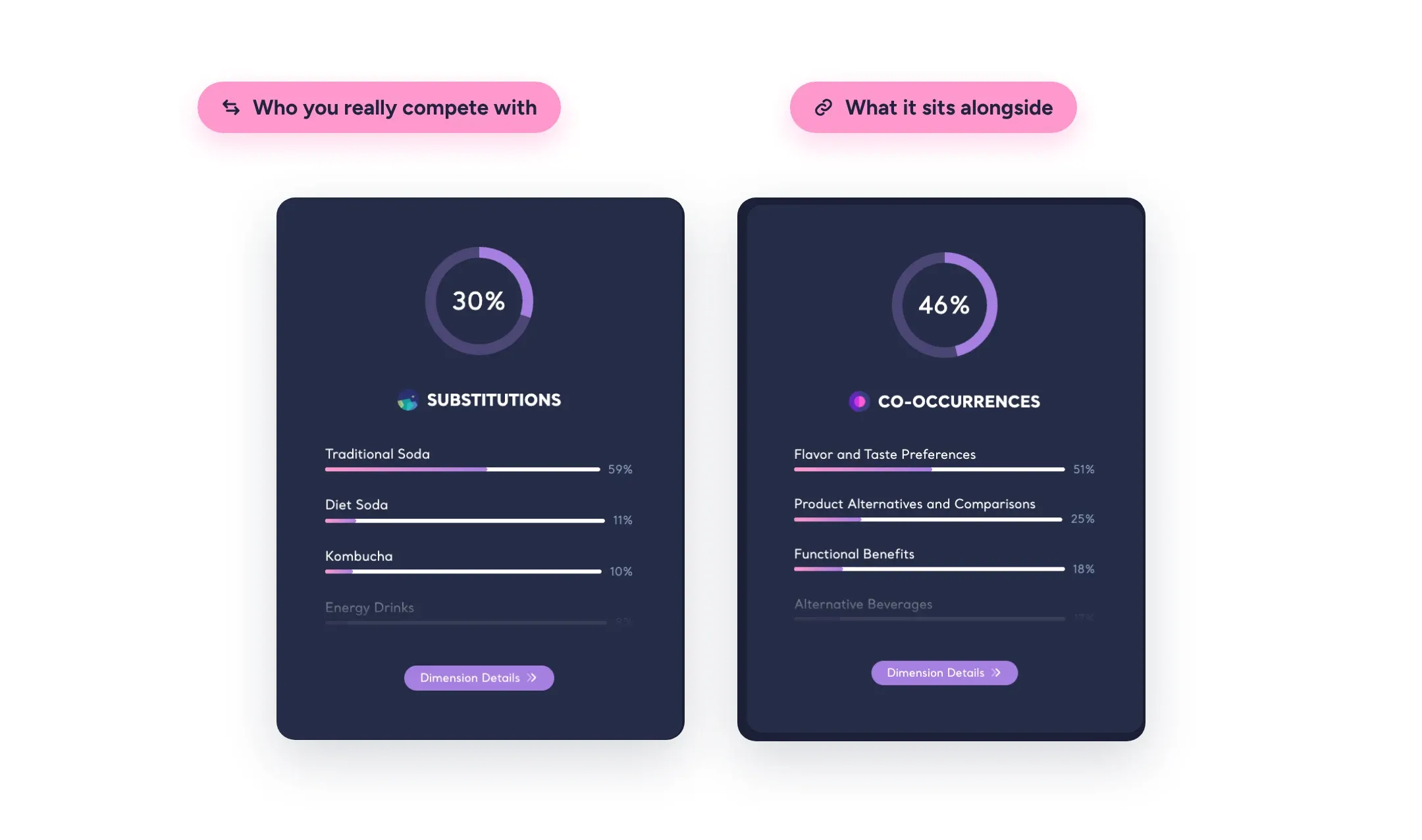
Substitutions asks what the experience replaces or is compared with: a rival, an earlier version, a different way of solving the same problem or simply doing it by hand. Co-Occurrences asks what it sits alongside: the accessories, apps and routines it is part of.
The first shows who you really compete with in your customers' minds, often not the brands on your own list. The second shows where partnerships, bundles and integrations could come from.
Related: Substitutions · Co-Occurrences
Where Dimensions Lead
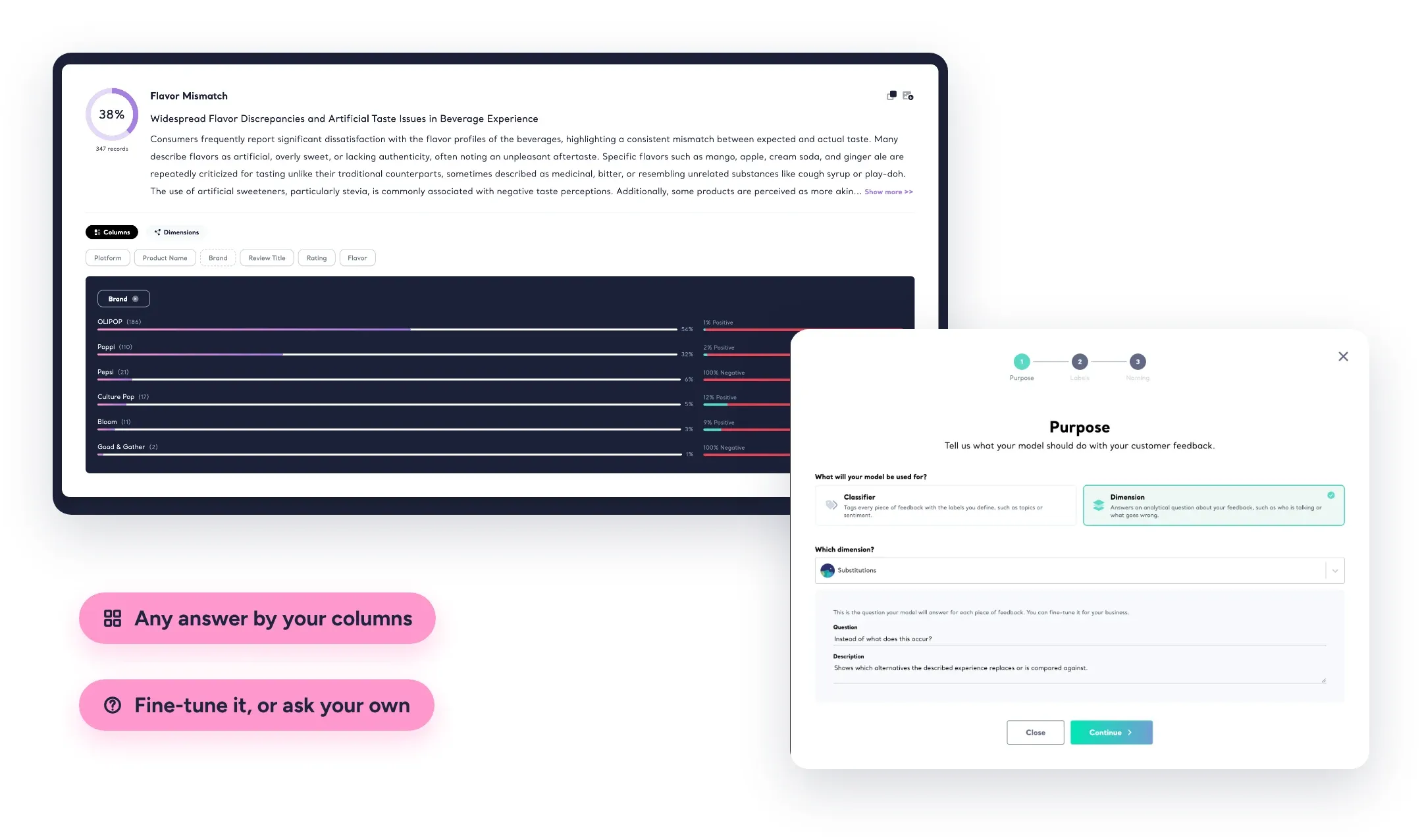
Dimension answers don't stay on a page of their own. Kimola crosses them with your columns, so you can see Pain Points by product or by city, uses them as groups for Signals and builds Action Plans on their evidence.
Dimensions are available in every package. In Spaces, with the Enterprise package or Kimola On-Premises, you can fine-tune each question for your business or write a research question of your own, and every channel then answers it in the same words.
Related: Dimensions in Reports · Add Dimensions to a Funnel
Bring the feedback you already have.
Organize feedback like a research team.
See the people behind the feedback.
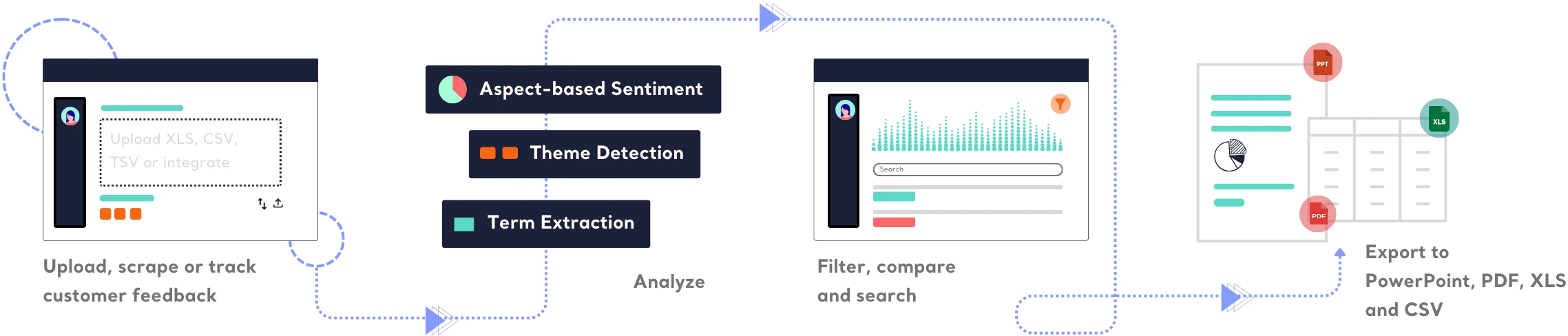
See how teams turn different kinds of feedback into research.






Frequently Asked Questions
About Research Dimensions
-
How are Dimensions different from topics and sentiment?
Topics and sentiment describe what customers talk about and how they feel. Dimensions ask research questions of the same feedback: who is speaking, why they chose you, what goes wrong, what is missing and what they would use instead. One piece of feedback can answer several Dimensions at once.
-
Do I have to define the possible answers myself?
No. In a Report, Kimola builds the answers by reading your data, so a bank and a food delivery app get different Pain Points, each in their own customers' words. In a Space, you can define the answers so that every channel is counted under the same ones.
-
Can I ask a research question that isn't in the ten?
Yes, in Spaces. With the Enterprise package or Kimola On-Premises, you can create a Custom Dimension with a question of your own, such as which channel a customer tried before contacting you, and every Space using it answers that question.
-
Who decides how large each answer is: the AI or the data?
The data. Counts and shares come from the classification of every record. An AI model writes the summaries afterwards, from numbers that are already computed, so the text never decides which answer is larger.
-
How do Dimensions relate to Signals?
Every answer of a Dimension can become a group that Signals compare. Kimola can show, for example, that a topic stands apart among one persona or at one stage of the experience, and when your data has no useful columns, Dimension answers become the groups.
-
How do Dimensions affect my usage?
Each Dimension you add is one more question asked of every record, so it adds to the queries an analysis uses. Add the Dimensions your team will actually read. See pricing for what each package includes.
Turn customer feedback into structured market research in 30+ languages—no AI training needed.
Create a Free Account No credit card · No commitment